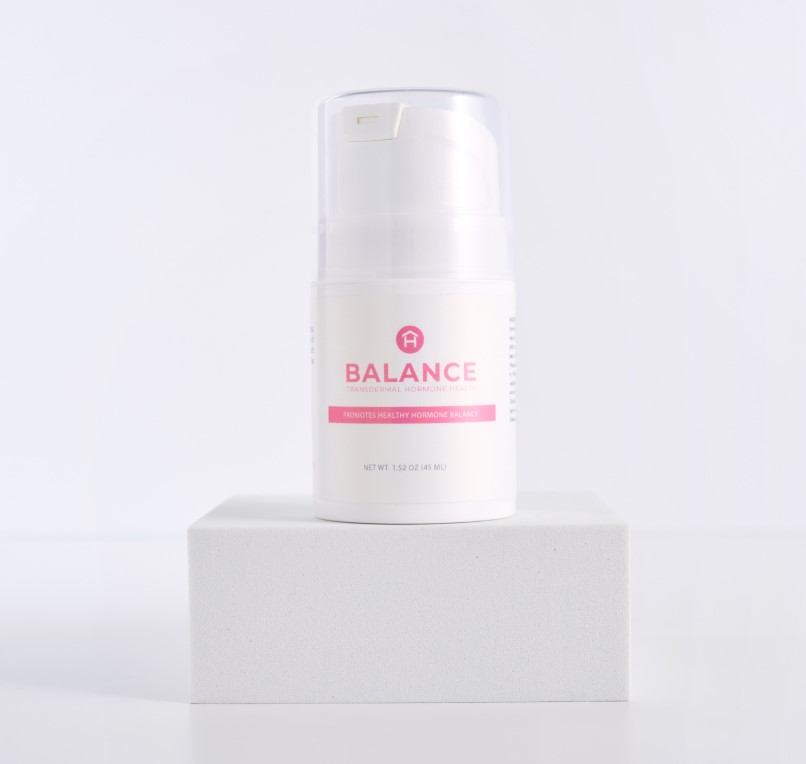
Ashwagandha has gone from a niche Ayurvedic herb to a supplement-aisle staple in just a few years, and now it shows up on the labels of creams and gels too. If you searched ashwagandha cream, you probably want to know what ashwagandha is, what research has actually looked at, whether a cream works like a capsule, and what to check before you use one. This guide covers all four and explains where BALANCE, HealthyHome’s multi-botanical topical that includes ashwagandha extract, fits into a daily routine.
hormonebalancecream.com is operated by All In Enterprises, LLC, independent HealthyHome distributors. HealthyHome owns and fulfills BALANCE. We do not. We may earn a commission when you shop or join through our links. This is general education, not medical advice.
The short answer
Ashwagandha cream is a topical cream or gel that lists ashwagandha (Withania somnifera) among its ingredients. Ashwagandha is best known as an adaptogen, a plant traditionally used to support the body’s response to everyday stress. Nearly all of the research used ashwagandha extracts taken by mouth, and very little has looked at ashwagandha applied to the skin. So the honest way to see an ashwagandha cream is as a botanical wellness product that may support calm and comfort as part of a routine, not as a substitute for anything your clinician recommends.*
What ashwagandha is
Ashwagandha is an evergreen shrub that grows in parts of India, Africa and the Middle East. It is sometimes called Indian ginseng, although it is not related to true ginseng. It has been used for thousands of years in Ayurveda, the traditional medicine of India, and the root is the part most often used. It contains a group of natural compounds called withanolides, which researchers study for their antioxidant activity. The National Center for Complementary and Integrative Health (NCCIH) fact sheet on ashwagandha is the clearest plain-language summary we know of.
What the research covers
Stress and sleep
This is where most of the human studies are. NCCIH reports that research shows some ashwagandha preparations may be effective for sleep and stress, while the evidence on anxiety is unclear. Many of the trials were small and used different preparations, so results from one product do not automatically carry over to another.
Menopause
Here the evidence is thin. NCCIH lists menopause among the areas where there is not enough evidence yet to say whether ashwagandha helps. That is a good reason to be wary of any product that presents ashwagandha as a proven menopause solution. Its more realistic role in a midlife routine is as one of several botanicals that support overall well-being and a sense of calm.*
Oral vs topical
Almost every one of those studies used capsules or powders taken by mouth, at measured doses, usually for one to three months. Very few have tested ashwagandha in a cream or gel. Skin absorbs ingredients differently from the gut, so be skeptical of any jar that quotes capsule research as if it proves what a cream will do.
What NCCIH says about safety
According to NCCIH, ashwagandha taken by mouth may be safe in the short term (up to three months), and less is known about long-term use. Some people get drowsiness or stomach upset, and rare cases of liver injury have been linked to ashwagandha supplements. NCCIH says ashwagandha should be avoided during pregnancy and while breastfeeding, is not recommended for people about to have surgery or for those with autoimmune or thyroid disorders, and may interact with several kinds of medication, including sedatives and thyroid medication.
A cream is a different format, but the same caution makes sense: if any of those apply to you, or you take prescription hormones or other medicines, check with your clinician before adding a product that contains ashwagandha. For any topical, run a patch test on a small area of skin first, as described in our guide to hormone cream for sensitive skin. Our is hormone cream safe? guide lists the other questions worth asking.
How to read an ashwagandha cream label
- Where is ashwagandha on the list? Ingredients are listed roughly by amount. A plant named near the end may be present in small quantities.
- Single herb or blend? Some creams are built around ashwagandha alone. Others, like BALANCE, combine it with several botanicals. See our walkthrough of hormone cream ingredients for how to read a blend.
- Any added hormones? A botanical cream should not list progesterone, estradiol or other hormones unless it says so clearly. Our guide to hormone cream without progesterone explains what to look for.
- Root or leaf extract? Most research used root or root-and-leaf extracts. A good label tells you which part of the plant is used.
- Claims. Botanical creams are not allowed to make disease claims. Language like “supports” or “may help” is normal. Dramatic promises are a red flag.
Where BALANCE fits in your daily routine
BALANCE is HealthyHome’s plant-based topical, designed to support hormonal balance during perimenopause and menopause.* It lists no hormones and is not hormone replacement therapy. Ashwagandha extract is one of its botanicals, alongside wild yam, maca, tongkat ali, red clover, black cohosh, chasteberry, soy isoflavones and flaxseed oil, in a base of jojoba oil, squalane and high-MCT coconut oil with raw honey. The full list is on the BALANCE ingredients page.
Because ashwagandha is traditionally associated with winding down, many people like BALANCE as part of a calm evening routine: apply it as the label directs to clean, dry skin, give it a few minutes to absorb, then move on to reading or stretching before bed. Others prefer right after the morning shower. Either works, as long as it happens at about the same time every day. Our guides on how to apply hormone cream and the best time to apply hormone cream cover the details. Give any new routine a few weeks before you judge it; how long hormone cream takes to work explains why.
Ashwagandha cream: FAQ
What is ashwagandha cream used for?
Ashwagandha creams are botanical wellness products. Ashwagandha is traditionally used as an adaptogen to support the body’s response to everyday stress, and in a cream it usually appears as part of a blend. Almost all research on ashwagandha used oral supplements, not creams.
Does ashwagandha cream work the same as ashwagandha capsules?
Not necessarily. Nearly all studies tested extracts taken by mouth at measured doses. Very little research has tested ashwagandha applied to the skin, so capsule results cannot simply be transferred to a cream.
Is ashwagandha safe for everyone?
No. NCCIH says ashwagandha should be avoided during pregnancy and breastfeeding, is not recommended for people with autoimmune or thyroid disorders, and may interact with some medications. Check with your clinician first if any of those apply.
Does BALANCE contain ashwagandha?
Yes. Ashwagandha extract is one of the botanicals in BALANCE, alongside wild yam, maca, red clover, black cohosh, chasteberry and others. BALANCE lists no hormones.
Should I patch test an ashwagandha cream?
Yes. Apply a small amount to a small area of skin and wait before regular use, especially if you have sensitive skin or plant allergies.
Shop or Join
BALANCE is HealthyHome’s plant-based topical in an airless pump bottle, with ashwagandha among its botanicals, made to fit a simple daily routine and designed to support hormonal balance during perimenopause and menopause.* HealthyHome handles payment, shipping and fulfillment. Read more on the About BALANCE page.
hormonebalancecream.com is operated by All In Enterprises, LLC, independent HealthyHome distributors. BALANCE is a registered trademark of HealthyHome, LLC. This article is for general education and is not medical advice. *These statements have not been evaluated by the Food and Drug Administration. This product is not intended to diagnose, treat, cure, or prevent any disease.