Chasteberry has been part of women’s herbal traditions for centuries, and it now turns up on supplement shelves, in teas and on the ingredient lists of some topical creams. If you searched chasteberry cream, you probably want to know three things: what the plant is, what research has actually looked at, and whether rubbing it on your skin is the same as taking it by mouth. This guide answers those questions plainly, covers the safety points worth knowing, and explains where BALANCE, a multi-botanical gel that includes chasteberry, fits.
hormonebalancecream.com is operated by All In Enterprises, LLC, independent HealthyHome distributors. HealthyHome owns and fulfills BALANCE. We do not. We may earn a commission when you shop or join through our links. This is general education, not medical advice.
The short answer
Chasteberry cream is a topical product that lists chasteberry (also called vitex or chaste tree) among its ingredients. Most of the research on chasteberry used oral extracts, mainly for comfort during the menstrual cycle, and the evidence is described by federal researchers as low to moderate in quality. There is very little research on chasteberry applied to the skin. So a chasteberry cream is best seen as a botanical wellness product, not a substitute for anything your clinician recommends.
What chasteberry is
Chasteberry is the fruit of Vitex agnus-castus, a shrub native to the Mediterranean and Central Asia. Its common names include chaste tree, monk’s pepper and vitex. According to the National Center for Complementary and Integrative Health, the name likely reflects an old belief that the plant promoted chastity, and in the Middle Ages monks reportedly used it for that purpose. Today it is sold mainly as a dietary supplement for women’s cycle and midlife comfort. The NCCIH fact sheet on chasteberry is the best plain-language summary we know of.
What the research covers
Cycle comfort
This is where most of the studies are. NCCIH notes that several studies of low-to-moderate quality have looked at chasteberry for premenstrual discomfort such as breast tenderness, and that some suggest a benefit, but higher-quality research is needed before anyone can draw firm conclusions.
Midlife and menopause
The evidence here is thinner. NCCIH describes only a preliminary study suggesting chasteberry might help with some menopausal symptoms and says more research is needed. If you see a jar promising dramatic midlife results from chasteberry alone, that promise is running well ahead of the science.
Oral vs topical
Nearly all of that research used capsules or tablets taken by mouth, at measured doses. Very few studies have tested chasteberry in a cream or gel, so results from oral studies cannot simply be transferred to a topical product. The same gap applies to many botanicals, which is why our black cohosh cream guide makes the same point about that herb.
Safety points worth knowing
- Usually well tolerated short term. NCCIH reports that chasteberry fruit extract has been used safely in studies for up to three months, with mild side effects such as nausea, stomach upset, headache or itching.
- Hormone-sensitive conditions. NCCIH says chasteberry may not be safe for women with hormone-sensitive conditions, such as breast, uterine or ovarian cancer.
- Pregnancy and breastfeeding. Use during pregnancy or while breastfeeding may be unsafe.
- Medications. If you take any medicine, especially prescription hormones or birth control, talk with your clinician before adding any herbal product. Some herbs and medicines interact.
- Skin. Topicals with plant oils and essential oils can irritate sensitive skin. A patch test on a small area is a smart first step.
For broader questions, our is hormone cream safe page walks through what to ask before you start any cream.
How to read a chasteberry cream label
- Find where chasteberry sits on the list. Ingredients are generally listed in order of amount. A plant named near the end is a minor part of the formula.
- Check for hormones. Look for “progesterone,” “progesterone USP,” “estradiol” or “estriol.” If any appear, it is a hormone product, not a botanical one. Our guide to hormone cream without progesterone explains the difference.
- Look at the whole blend. Chasteberry is often paired with other botanicals. Know every plant on the panel, including allergens such as soy or nut oils.
- Be cautious with big promises. Promises that a cream will fix a medical problem are a red flag. Botanical topicals are wellness products.
Where BALANCE fits
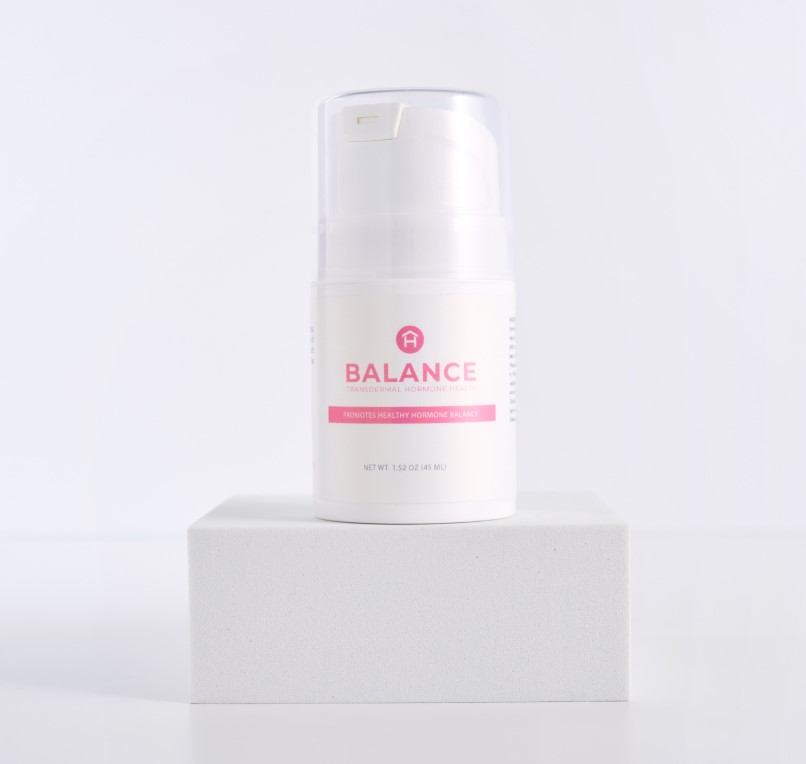
BALANCE is HealthyHome’s plant-based topical gel, applied to clean skin, designed to support hormonal balance during menopause and the years leading up to it.* It is not hormone replacement therapy, and its ingredient list includes no progesterone, estrogen or testosterone. Chasteberry is one of several botanicals in the blend, alongside wild yam, maca, tongkat ali, flaxseed oil, ashwagandha, red clover, black cohosh, soy isoflavones, blue tansy, clary sage and rosemary, in HealthyHome’s NanoShield base of jojoba oil, squalane and coconut oil. BALANCE contains soy. The full list is on our ingredients page, with plant-by-plant notes in plant-based ingredients for hormone balance.
In other words, BALANCE is not a single-herb chasteberry cream. It is a multi-botanical routine, and the honest expectation is the same as for any botanical: consistency over weeks, alongside sleep, movement and good nutrition. Our how to apply hormone cream guide covers the daily routine, and how long hormone cream takes to work sets a realistic check-in timeline.
If you have a hormone-sensitive condition, are pregnant or breastfeeding, or take prescription hormones, show your clinician the ingredient list before you start. The National Institute on Aging’s overview of this life stage is a good place to prepare questions.
Chasteberry cream FAQ
What is chasteberry cream?
It is a topical cream or gel that lists chasteberry, also called vitex or chaste tree, among its ingredients. Some are single-herb products and others, like BALANCE, are multi-botanical blends.
Does chasteberry work on the skin the same way as a supplement?
Not necessarily. Most chasteberry research used oral extracts at measured doses, and there is very little research on topical use, so oral results cannot simply be applied to creams.
Is chasteberry safe?
NCCIH reports it is generally well tolerated short term, with mild side effects. It may not be safe for women with hormone-sensitive conditions or during pregnancy or breastfeeding, and it may interact with some medicines.
Does BALANCE contain chasteberry?
Yes. Chasteberry is one of several botanicals in BALANCE, a plant-based topical gel with no progesterone, estrogen or testosterone on its ingredient list.
Is chasteberry the same as a hormone?
No. Chasteberry is a plant. A cream that lists progesterone, estradiol or estriol on its panel is a hormone product, whatever herbs it also contains.
Shop or Join
HealthyHome handles payment, shipping and fulfillment. Learn more about BALANCE on the hormonebalancecream.com home page.
Order BALANCE Now · Join & Get Member Pricing
hormonebalancecream.com is operated by All In Enterprises, LLC, independent HealthyHome distributors. BALANCE is a registered trademark of HealthyHome, LLC. Ingredients summarize HealthyHome’s published BALANCE product information; always read the label on your product. This article is for general education and is not medical advice. *These statements have not been evaluated by the Food and Drug Administration. This product is not intended to diagnose, treat, cure, or prevent any disease.