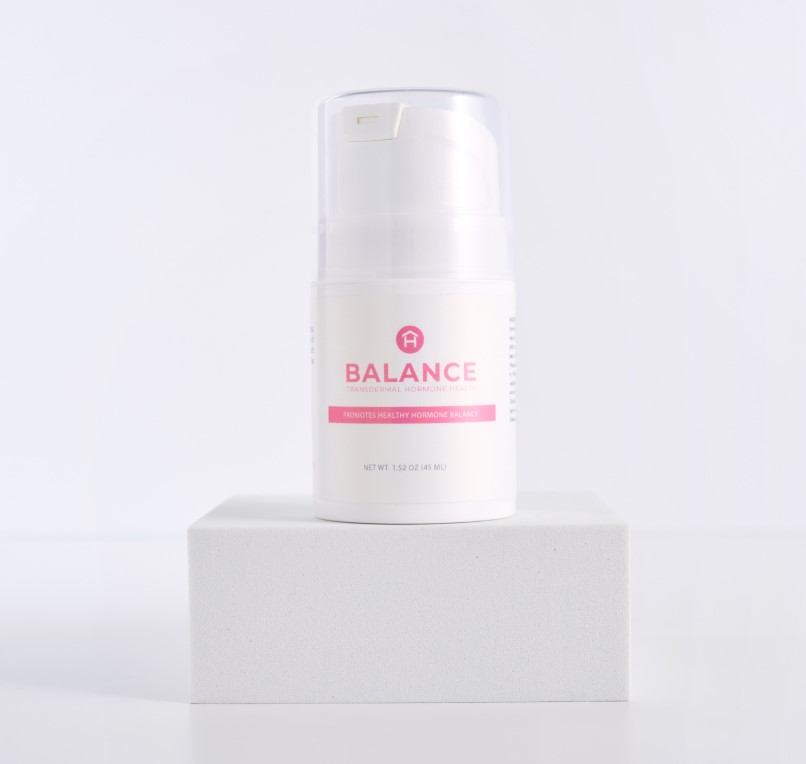
Red clover is the pink-purple wildflower you have probably walked past in a meadow or a lawn. It is also one of the most talked-about plants in women’s midlife wellness, mostly because of the natural compounds it contains. If you searched red clover cream, you likely want to know what red clover actually is, what research has looked at, whether a cream works the same way as a capsule, and what to check on a label. This guide covers all four and explains where BALANCE, a multi-botanical gel that includes red clover, fits.
hormonebalancecream.com is operated by All In Enterprises, LLC, independent HealthyHome distributors. HealthyHome owns and fulfills BALANCE. We do not. We may earn a commission when you shop or join through our links. This is general education, not medical advice.
The short answer
Red clover cream is a topical cream or gel that lists red clover (Trifolium pratense) among its ingredients. Red clover contains isoflavones, plant compounds that are structurally similar to estrogen. Most of the research used oral red clover extracts, and according to federal researchers it has not shown conclusive benefits. Almost no research has looked at red clover applied to the skin. So the honest way to see a red clover cream is as a botanical wellness product that may support comfort as part of a routine, not as a replacement for anything your clinician recommends.*
What red clover is
Red clover is a legume, a relative of peas and beans, native to Europe, central Asia and northern Africa and now grown widely around the world. Its common names include cow clover, meadow clover and wild clover. The flower tops have long been used in herbal teas and traditional preparations. The National Center for Complementary and Integrative Health (NCCIH) fact sheet on red clover is the clearest plain-language summary we know of.
Isoflavones and phytoestrogens, in plain English
Red clover’s reputation comes from its isoflavones, a group of phytoestrogens. “Phyto” means plant. Phytoestrogens are plant compounds shaped enough like estrogen that researchers study how they interact with the body. They are much weaker than the body’s own hormones, and they are not the same thing as estrogen medication. Soy and flaxseed are two other well-known sources, and both also appear in BALANCE. Our guide to natural estrogen cream explains how to read labels that use this kind of language.
What the research covers
Hot flashes
This is where most of the studies are. NCCIH reports that studies of red clover for hot flashes associated with menopause have had inconsistent results, and that some of them had a high risk of bias. Some trials found a modest effect and others did not, which is why no firm conclusion has been reached.
Cholesterol and bone
NCCIH notes that red clover may have a beneficial effect on cholesterol levels in postmenopausal women, but that more research is needed. Only a small number of studies have looked at bone density, and those results were also inconsistent.
Oral vs topical
Nearly all of that research used capsules or tablets of standardized red clover extract, taken by mouth at measured doses. Very few studies have tested red clover in a cream or gel, so results from oral studies cannot simply be transferred to topical products. Be skeptical of any jar that quotes capsule research as if it proves what a cream will do.
What NCCIH says about safety
- Red clover extracts have been used in clinical studies for as long as 2 years with apparent safety and appear to be well tolerated.
- Red clover supplements may be unsafe during pregnancy or while breastfeeding.
- If you take any medicine, talk with your health care provider before using an herbal product, since some herbs and medicines interact.
Because red clover contains phytoestrogens, it is also sensible to check with your clinician first if you have a history of a hormone-sensitive condition or take prescription hormones. For topical products, do a patch test on a small area of skin before regular use. Our guide is hormone cream safe? lists the questions worth asking.
How to read a red clover cream label
- Where is red clover on the list? Ingredients are listed roughly by amount. A plant named near the end may be present in small quantities.
- Single herb or blend? Some creams are built around red clover alone. Others, like BALANCE, combine it with several botanicals.
- Any added hormones? A botanical cream should not list progesterone, estradiol or other hormones unless it says so clearly. See our guide to hormone cream without progesterone.
- Allergens. Red clover is a legume. If you react to legumes or soy, read the full list carefully.
- Claims. Botanical creams and supplements are not allowed to make disease claims. Language like “supports” or “may help” is normal. Dramatic promises are a red flag.
Where BALANCE fits
BALANCE is HealthyHome’s plant-based topical gel, applied to clean skin, designed to support hormonal balance during menopause and the years leading up to it.* It is not hormone replacement therapy, and its ingredient list includes no progesterone, estrogen or testosterone. Red clover is one of several botanicals in the blend, alongside wild yam, maca, tongkat ali, flaxseed oil, ashwagandha, black cohosh, chasteberry, soy isoflavones, blue tansy, clary sage and rosemary, in HealthyHome’s NanoShield base of jojoba oil, squalane and coconut oil. BALANCE contains soy. The full list is on our ingredients page, and our sister guides cover black cohosh cream and chasteberry cream.
In other words, BALANCE is not a single-herb red clover cream. It is a multi-botanical routine, and the honest expectation is the same as for any botanical: use it consistently for several weeks, alongside sleep, movement and good nutrition, and check in with how you feel. Our how to apply hormone cream guide covers the daily routine.
Red clover cream FAQ
What is red clover cream?
It is a topical cream or gel that lists red clover among its ingredients. Some are single-herb products and others, like BALANCE, are multi-botanical blends.
Does red clover contain estrogen?
No. Red clover contains isoflavones, plant compounds that are structurally similar to estrogen but much weaker. They are not the same as estrogen medication.
Does red clover cream work the same as a red clover supplement?
Not necessarily. Most red clover research used oral extracts at measured doses, and very little has looked at topical use, so oral results cannot simply be applied to creams.
Is red clover safe?
NCCIH reports that red clover extracts appear to be well tolerated in studies lasting up to 2 years. It may be unsafe during pregnancy or breastfeeding, and you should ask your provider first if you take medicines.
Is red clover in BALANCE?
Yes. Red clover is one of several botanicals in BALANCE, alongside wild yam, black cohosh, chasteberry, soy isoflavones and others. BALANCE contains soy.
Shop or Join
HealthyHome handles payment, shipping and fulfillment. Learn more about BALANCE on the hormonebalancecream.com home page.
Order BALANCE Now · Join & Get Member Pricing
hormonebalancecream.com is operated by All In Enterprises, LLC, independent HealthyHome distributors. BALANCE is a registered trademark of HealthyHome, LLC. Ingredients summarize HealthyHome’s published BALANCE product information; always read the label on your product. This article is for general education and is not medical advice. *These statements have not been evaluated by the Food and Drug Administration. This product is not intended to diagnose, treat, cure, or prevent any disease.